Killary Sheep Farm.
A Working Sheep Farm near Clifden Ireland.
Killary Sheep Farm is in Connemara, County Galway, Ireland.
The drive itself is part of the experience. The road narrows to a ribbon of pavement winding between stone walls and the countryside, with only an occasional place to pass another vehicle.
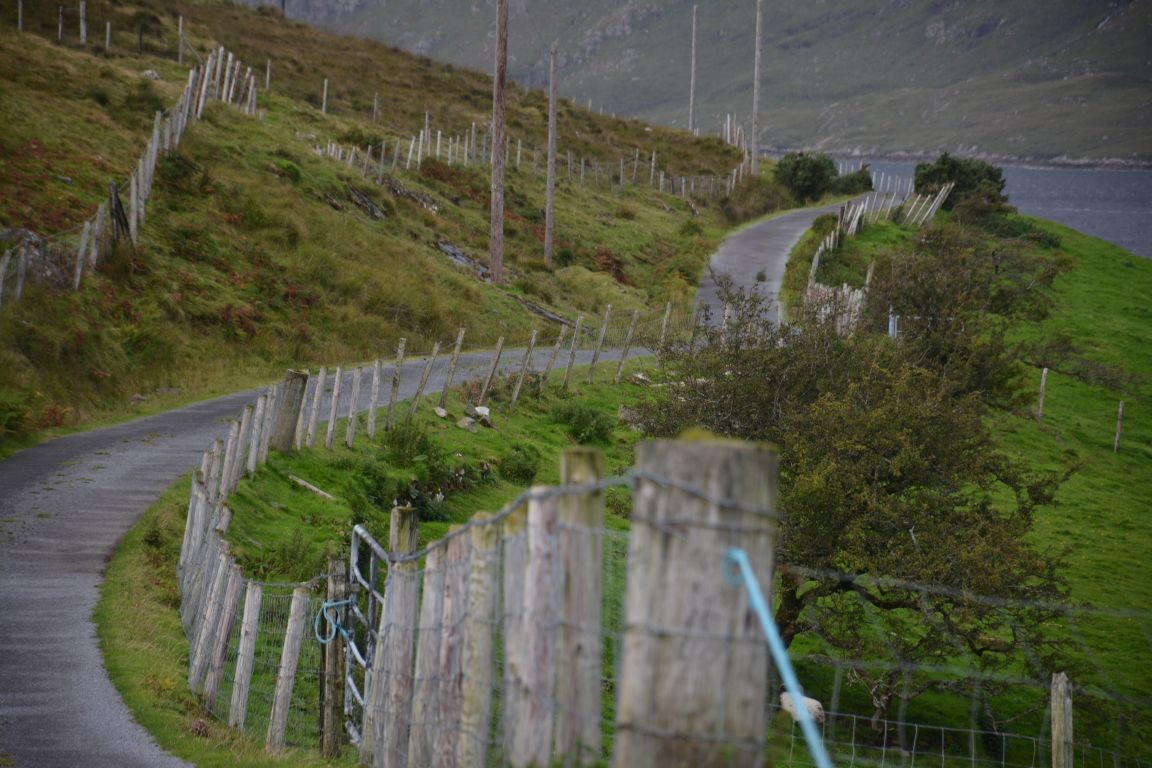
Upon arrival, we met a couple from Philadelphia and he asked me “How the H*** do we get back out of here?” I replied that “I may just drive backwards the exact way I came in”. The befuddled stare from the flat-lander said it all. Actually, it seemed like appropriate advice for a road this long & narrow.
A Working Farm in the Connemara Landscape
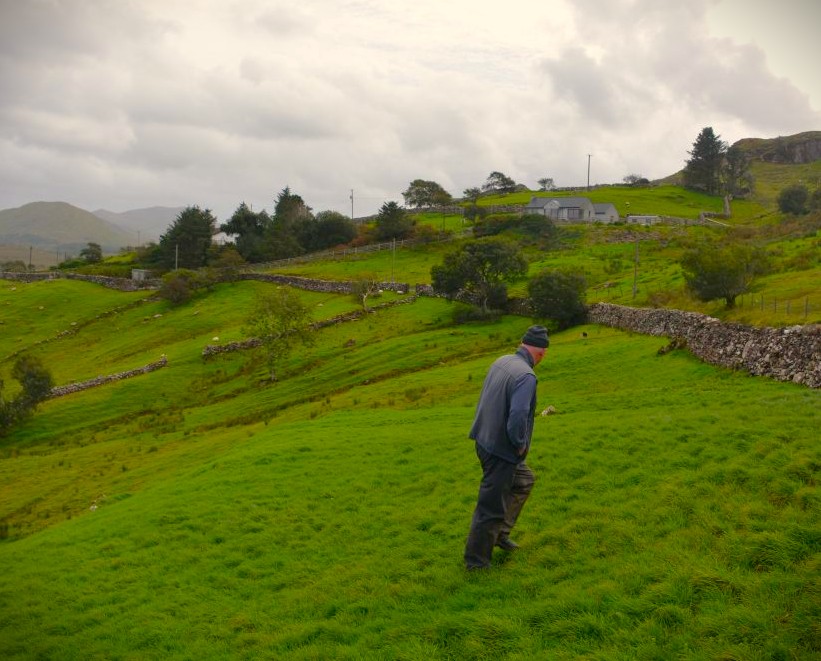
The farm itself is spectacular. A large stretch of pastures falling away along the side of a steep hill, opening toward a broad lake nestled among the mountains and foothills.
Stone walls divide the fields, hedgerows follow the contours of the land, and scattered trees break up the green expanse.
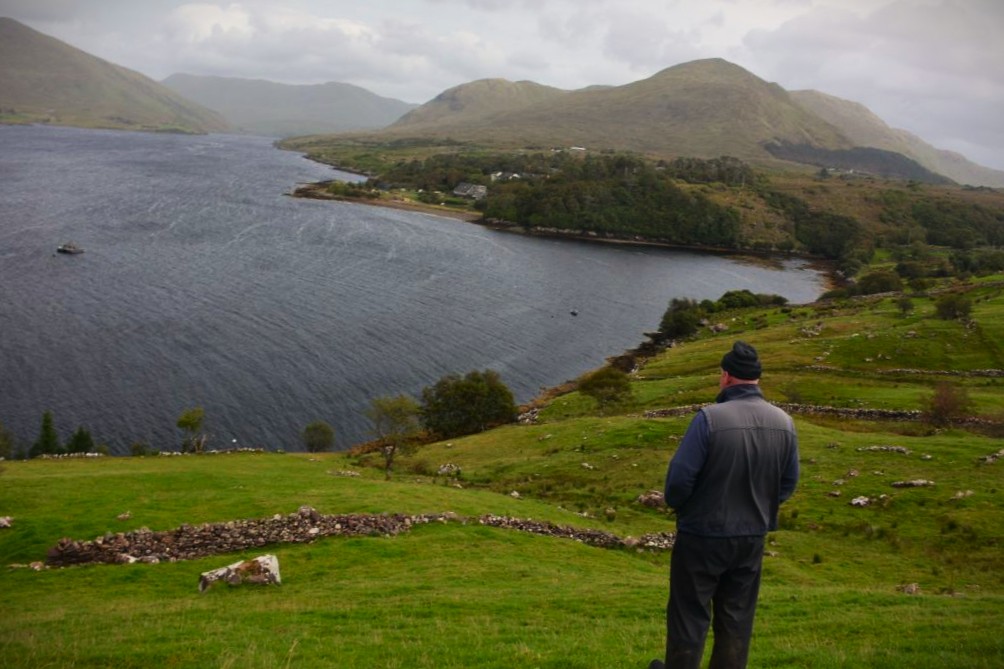
It is the kind of scenery that makes you just stop and simply absorb the beauty of the landscape.
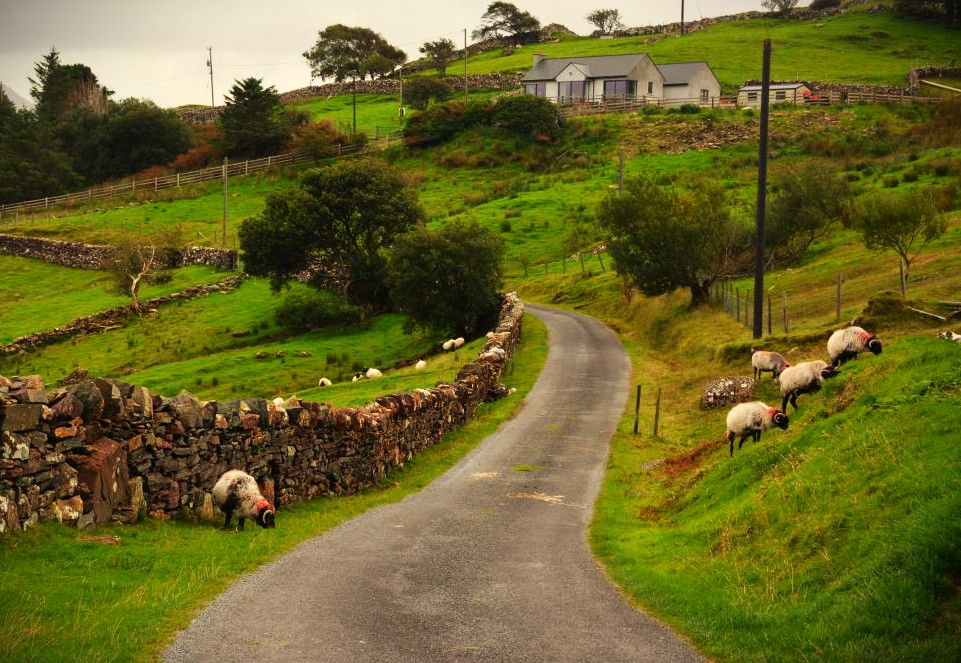
The property has been in the family for approximately 125 years, and there is a strong sense that the farm and the landscape are inseparable. This isn’t a staged demonstration set against an Irish backdrop. This is a working farm, and these dogs have a real job to do.
TJ came up the hill toward us dressed in rugged working clothes and led us to a fenced viewing paddock.
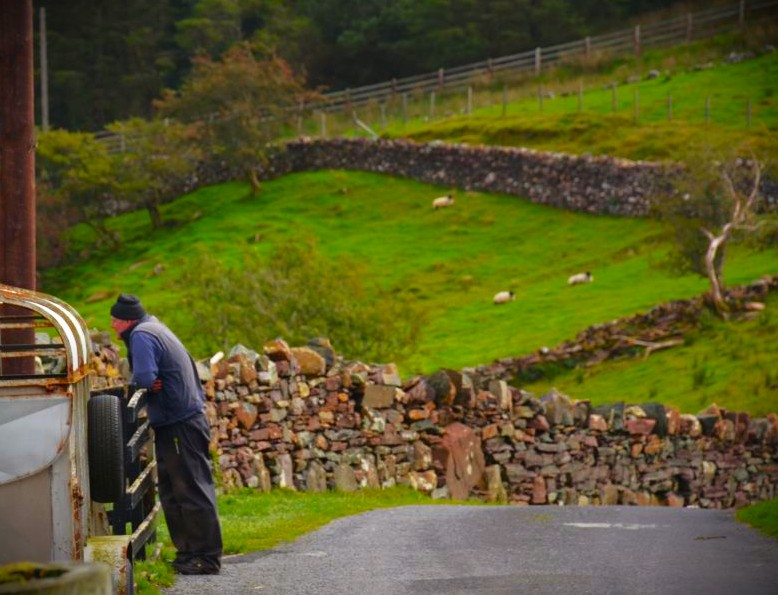
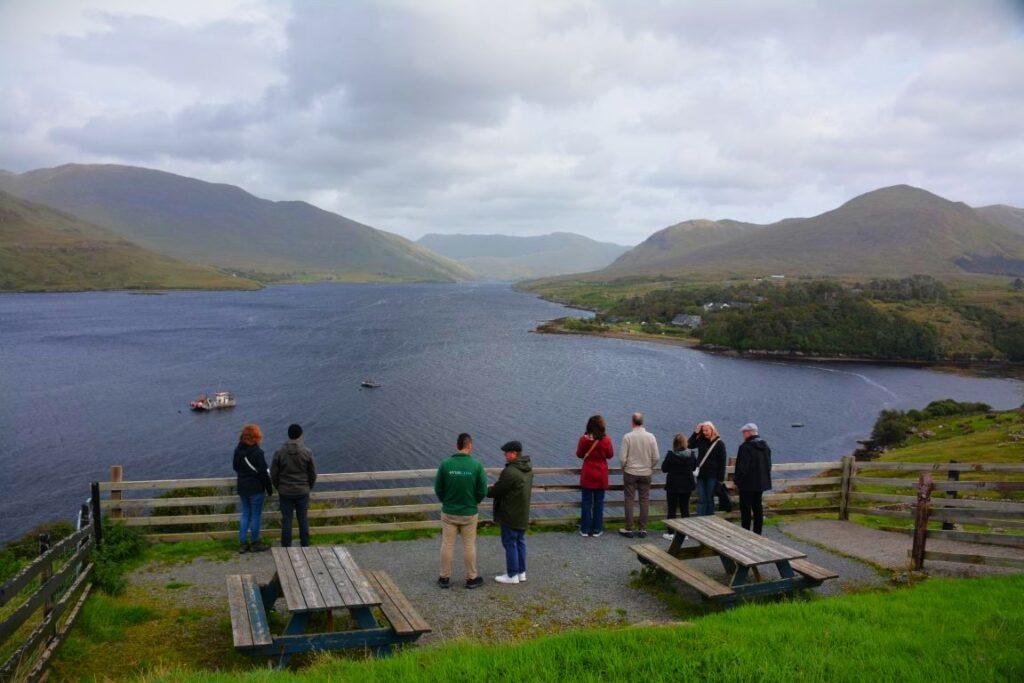
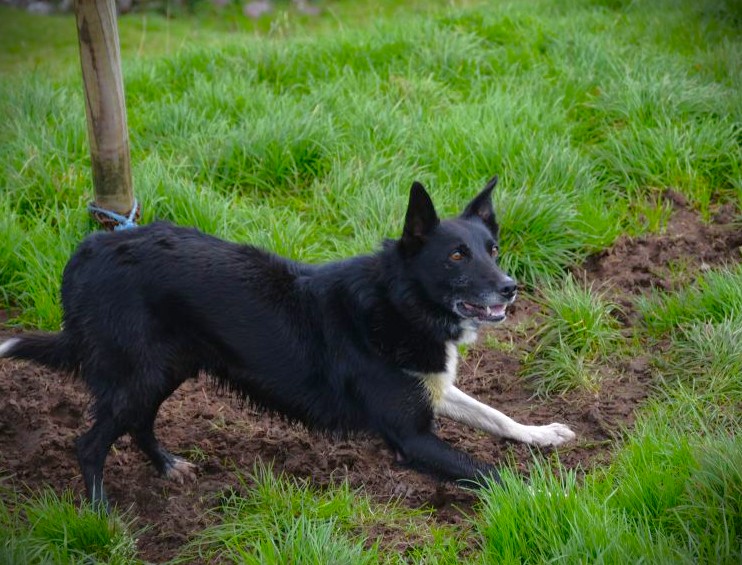
His dog was tethered nearby, and as we approached, it was immediately apparent that the dog knew another job was about to happen.
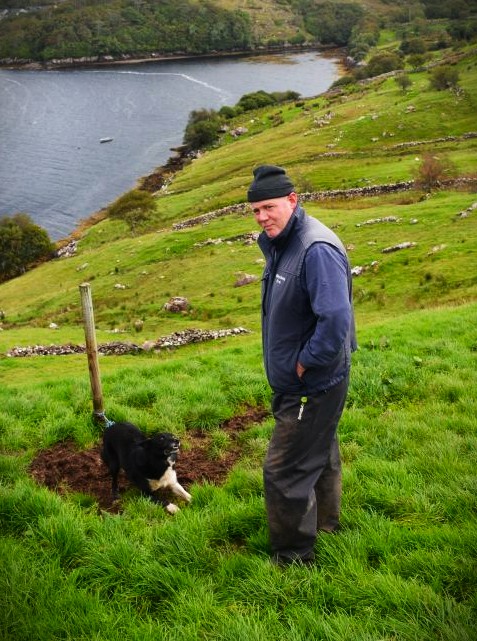
There was an energy in its posture—a combination of anticipation, concentration and barely restrained eagerness.
Watching a Sheepdog Work
Beyond the paddock, sheep were scattered across a hundred acres or more of pasture. Stone walls, hedgerows and small groups of trees created a landscape that would make moving the flock anything but simple.
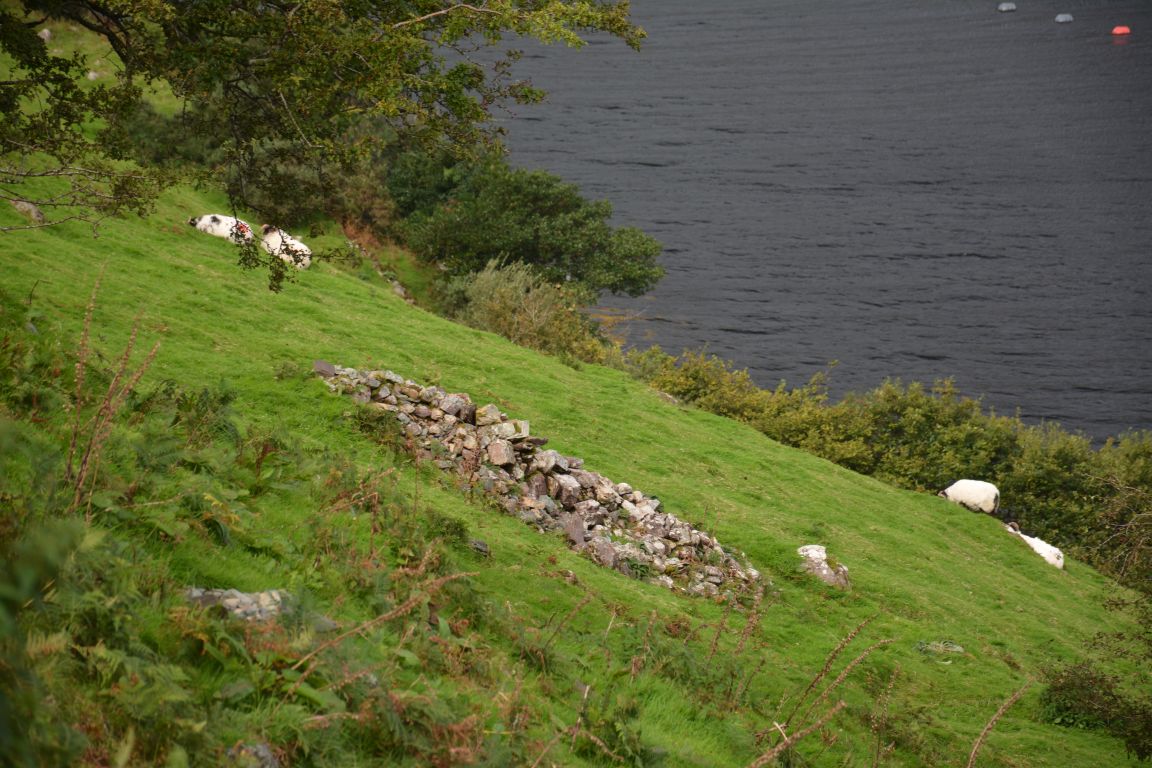
TJ explained that the objective of a good sheepdog isn’t simply to corral the sheep. The real skill is learning how to move them—to understand where the flock needs to go and then influence its movement with as little force as possible.
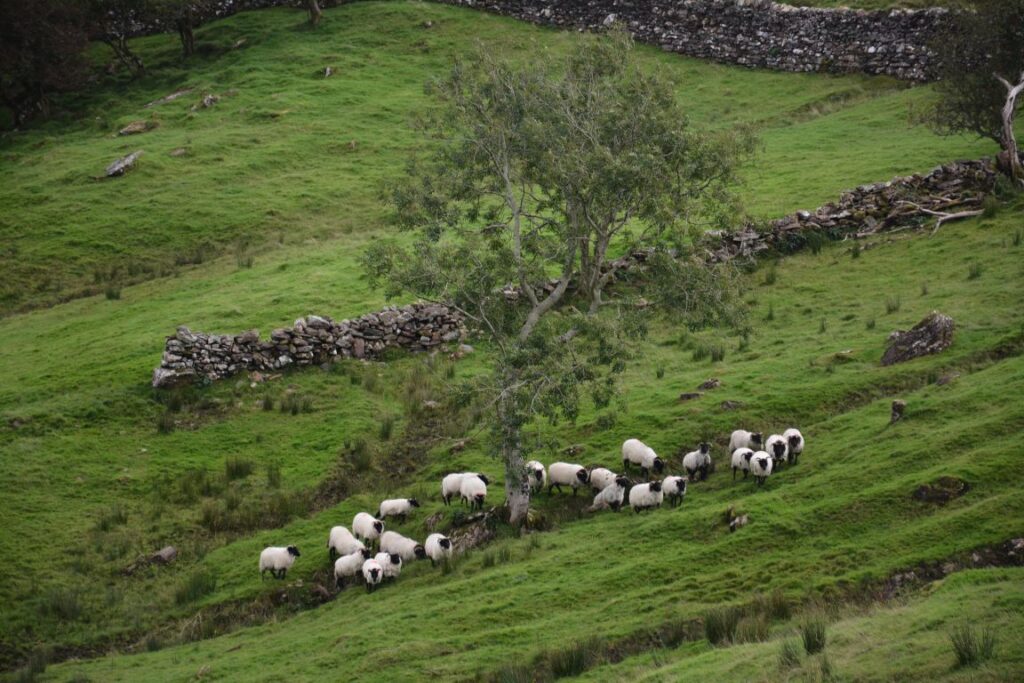
TJ released Rex.
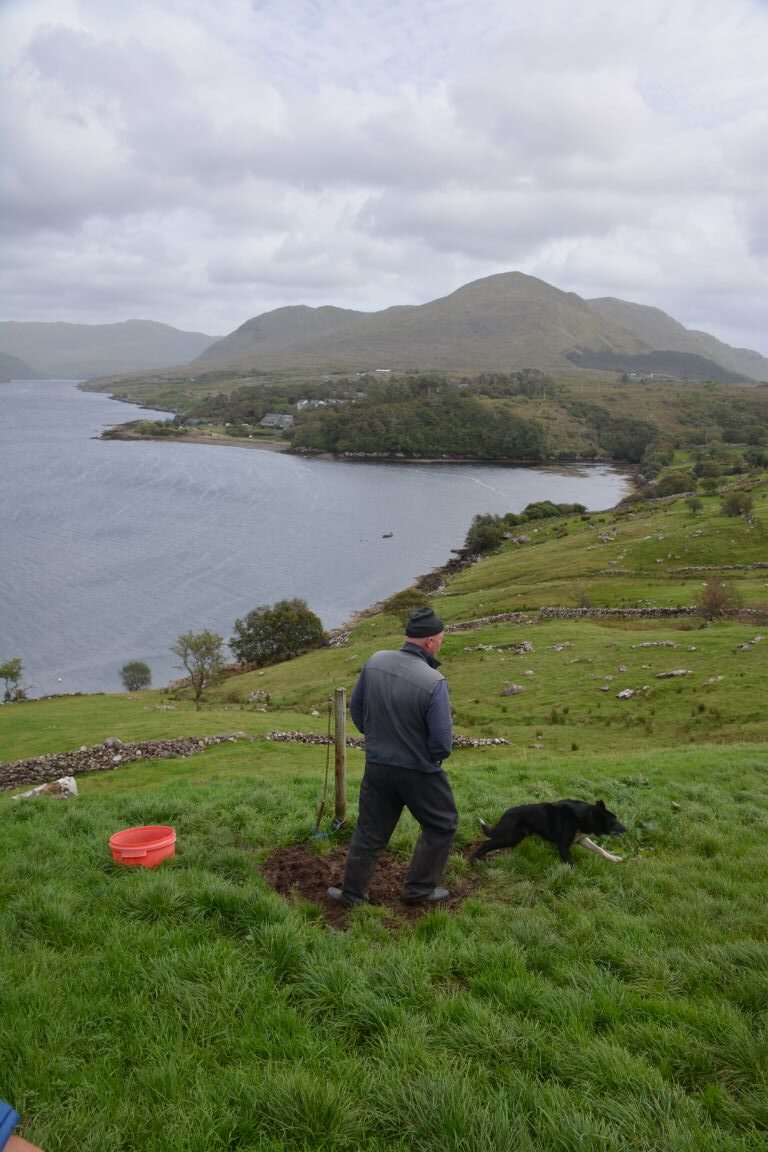
There were perhaps twenty-five to thirty sheep in the pastures for the demonstration.
What happened next was remarkable.
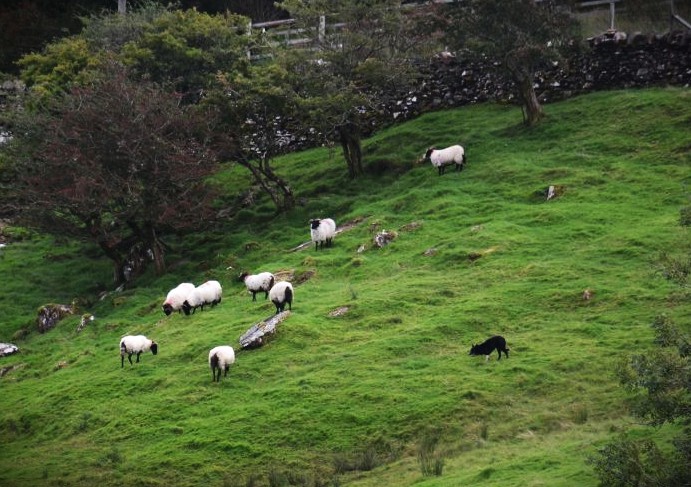
With only a few quiet commands, the dog moved away from him and began working the flock. It would cut sharply to the left, then sweep around to the right, stopping instantly when TJ gave the command, to allow the sheep to gather. At times it was 200 or 300 meters away, yet it remained completely connected to him.
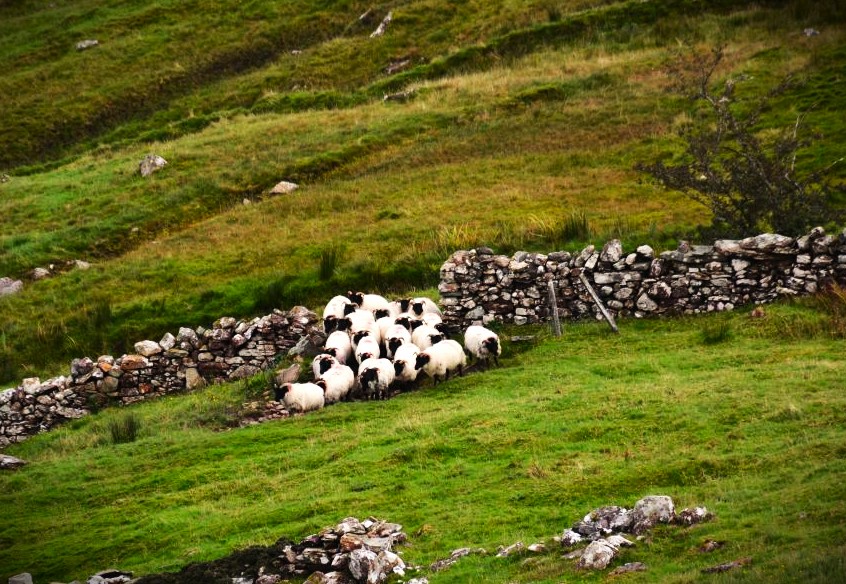
The commands was delivered in little more than a low, soft voice, even as attendees around us spoke considerably louder.
From where we stood, it was fascinating to watch the dog respond to instructions that seemed almost impossibly subtle. TJ didn’t need to shout across the field. The dog simply listened.
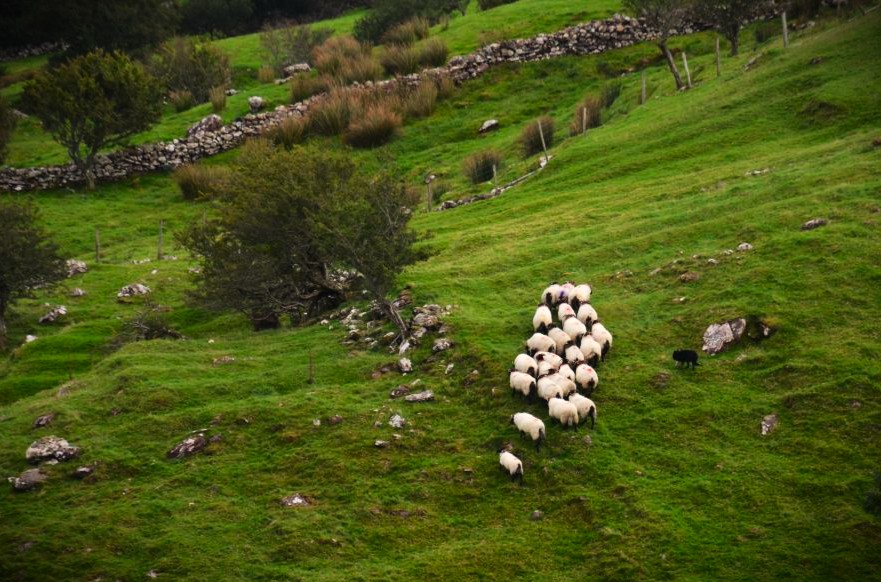
And watched.
And worked.
The Language Between Man and Dog
Occasionally the dog would ignore a command or hesitate. A low whistle or a slightly raised “Dog” was enough to bring its attention immediately back to TJ.
Then it would resume its work.
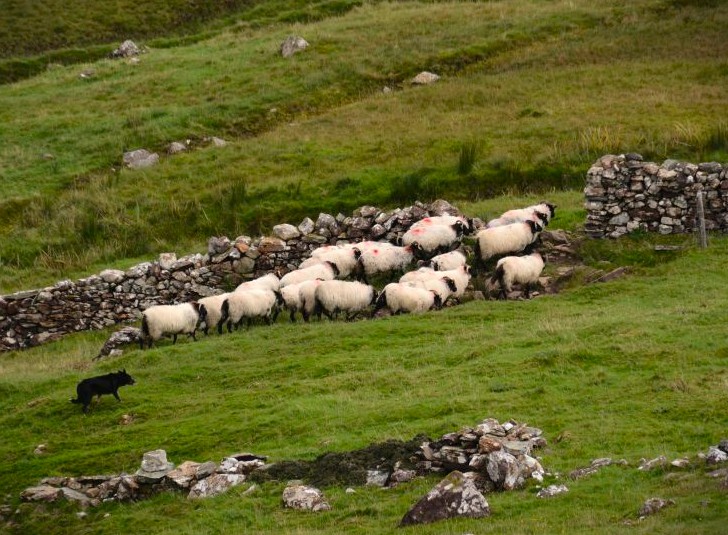
The relationship was fascinating to photograph because so much of it happened in tiny movements—the direction of the dog’s head, the position of its body, a change in speed, or a barely audible command from TJ.
There was very little wasted motion.
Someone in our group finally asked TJ, “Does it usually take this long?”
The sheep had been making their way around the pasture while we watched.
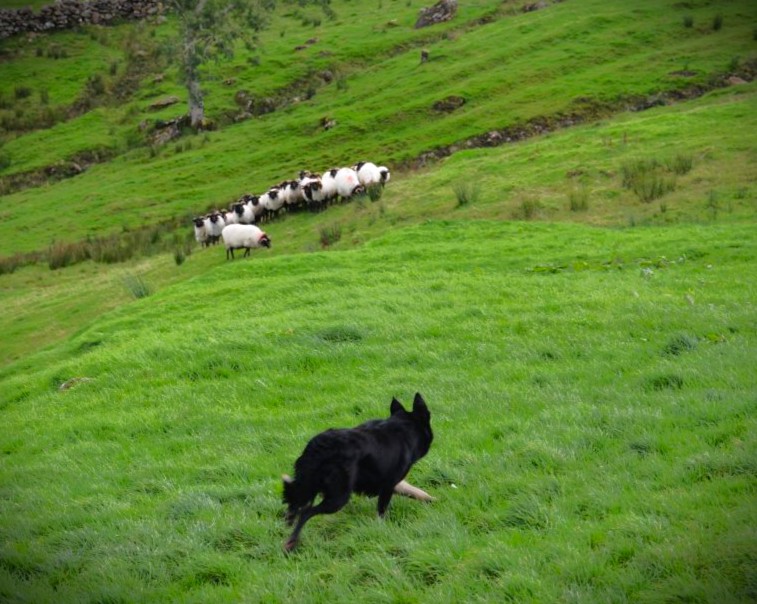
TJ looked back at us with a dry yet honest smile.
“On a normal day, Rex would have them herded in less than two minutes—but you wouldn’t want to pay for that.”
That pretty much summed up the difference between working a sheepdog and watching a demonstration.
More Than Just a Herding Dog
TJ was remarkably open about the dogs, their training and what makes a good sheepdog.
He explained that the goal isn’t simply to produce a dog that will chase sheep around a field. A good dog must understand how to move the sheep. It has to know when to push, when to back off and how to respond to the farmer without becoming too aggressive or too timid.
“Some dogs are too rough. Others are too hesitant. The best dogs find that difficult balance between confidence and control.”
TJ & his brother raise and train working Border Collies.
The value of a well-trained working sheepdog reflects just how specialized these animals are. He told us that a properly trained dog can sell for $7,000 to $8,000.
Watching one work, it was easy to understand why.
When asked if anyone uses an ATV instead of a dog, TJ simply responded “the dog does all the work.”
This wasn’t simply a dog performing tricks. We were watching generations of farming knowledge expressed through a remarkable partnership between a man, his dog and a flock of sheep.
A Working Farm, Not a Tourist Attraction
The sheep themselves are raised primarily for meat. TJ explained that there is little market locally for the wool in the quantities produced in Ireland; the primary buyers of bulk wool are the Chinese, where it is used for making rugs. The sheep typically mature for sale in 10 years.
That practical reality is another reminder that this is a working farm first.
A man and his farm.
TJ & his brother Tom manage the farm. The setting is one that you would expect in a movie set.
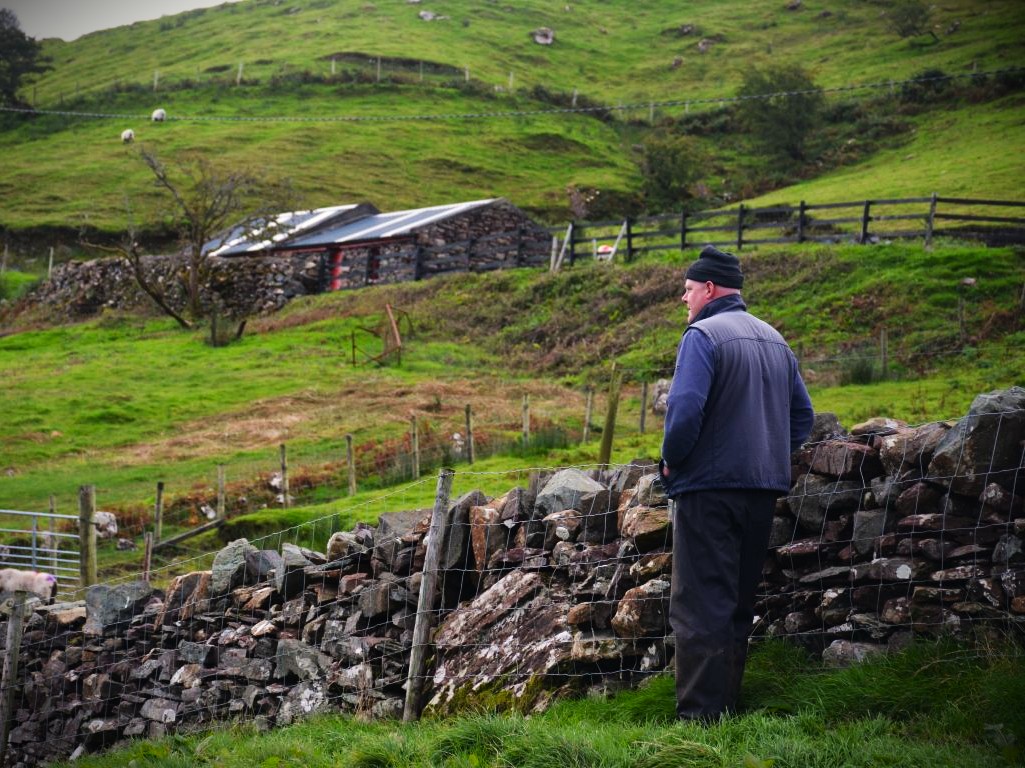
The landscape may look idyllic—and photograph beautifully—but farming here is still a business, dependent on the land, the animals and the skills passed from one generation to the next.
Just being there, watching TJ & Rex, you can feel the respect for the farm that TJ has for the land. We saw but a small portion, as the property extended well beyond the pastures we saw. Many of the sheep will graze for a couple of years and be corralled occasionally for inspection and vaccinations.
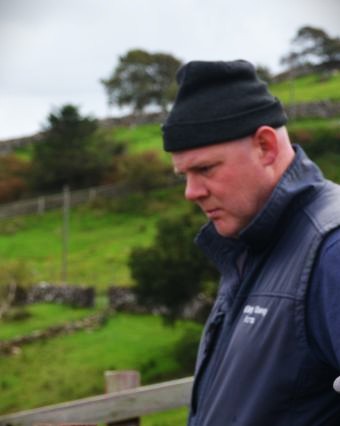
For us, the visit to Killery Sheepdogs became much more than an opportunity to photograph border collies in an extraordinary Irish landscape.
It was a glimpse into a way of life that has been shaped by this land for generations.
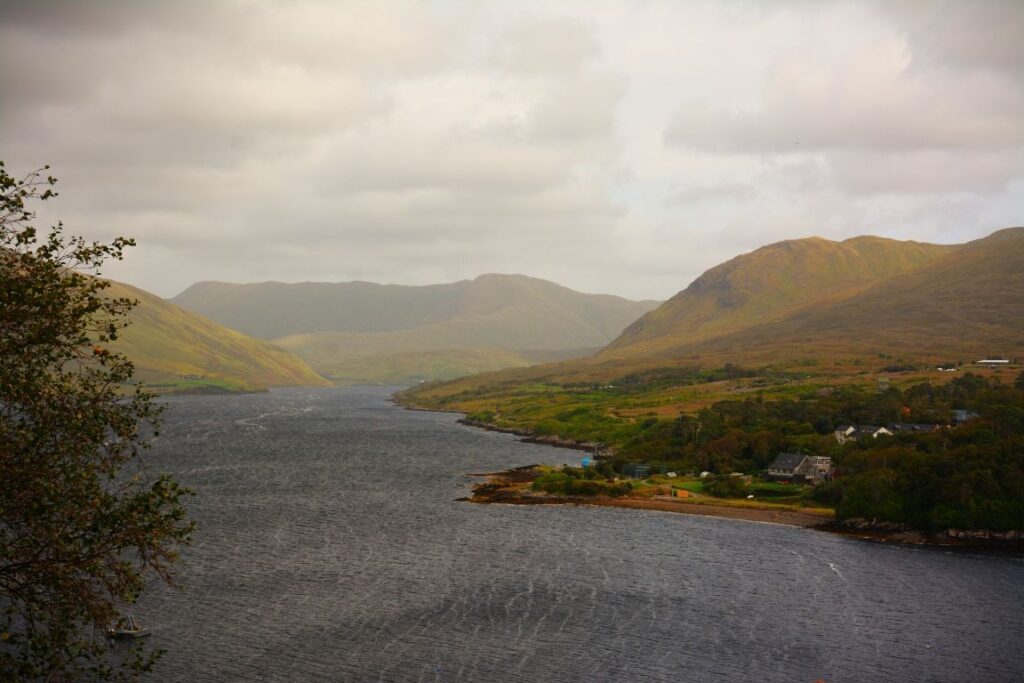
And for a photographer, it was almost impossible to ask for a better setting:
Green hills cascading toward the water, mountains in the distance, old stone walls dividing the fields, sheep moving across the landscape—and a black-and-white sheepdog seemingly disappearing into the grass before reappearing exactly where it needed to be.
Killery Sheep Farms was one of those experiences where the photography and the story became inseparable.
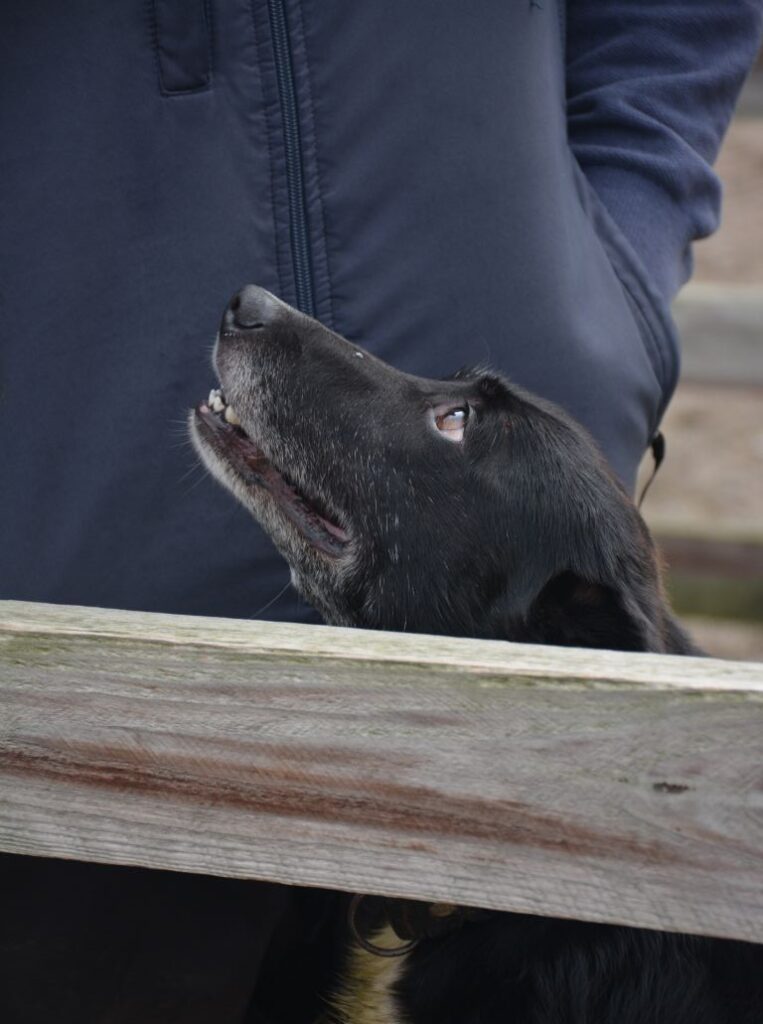
When asked, TJ said: “There is no reward for the dog. The Sheep are Rex’s reward.”
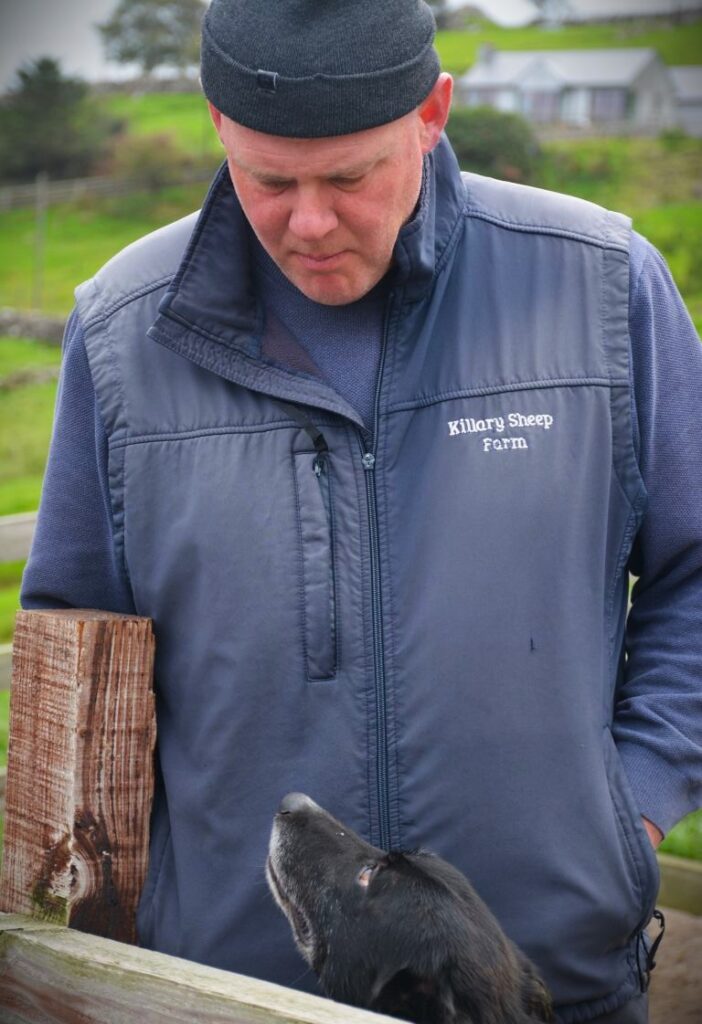
The dog was fascinating, but so was the landscape they work in—and the centuries-old relationship between the farmer, the sheep, and the land.