Slivemore
The most difficult to photograph
The most memorable
Our GPS was set, and we were heading toward our destination. Not sure if accurate but it was set.
It seemed too close
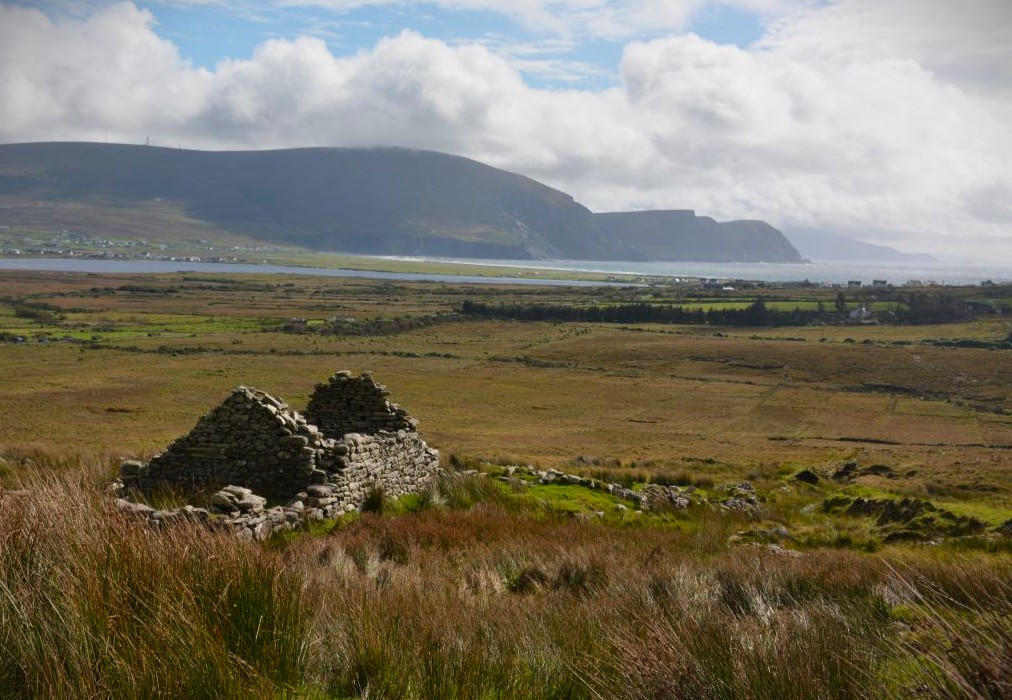
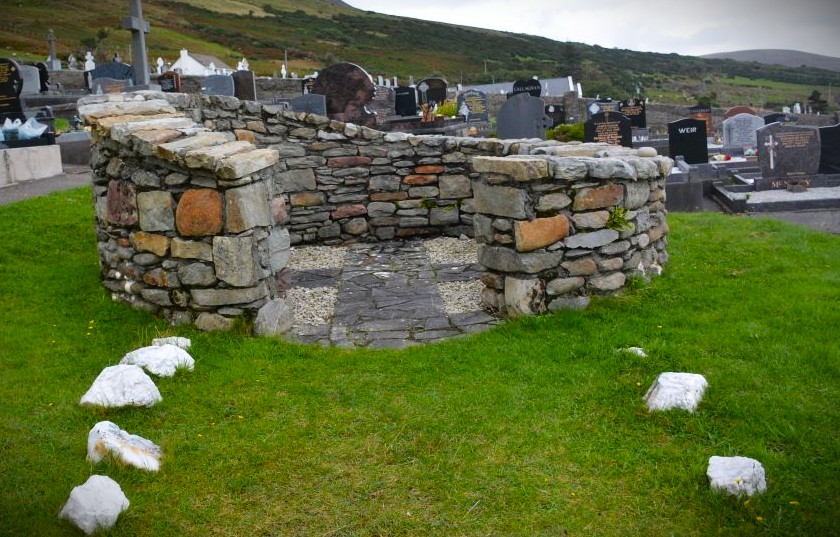
As we drove along the long narrow valley road, a large cemetery suddenly appeared to our right, tucked into the floor of a beautiful valley. The view was unexpected—and striking. Beyond the graves, the valley opened into a landscape that seemed almost untouched, with the remains of old homes scattered across the hillsides.
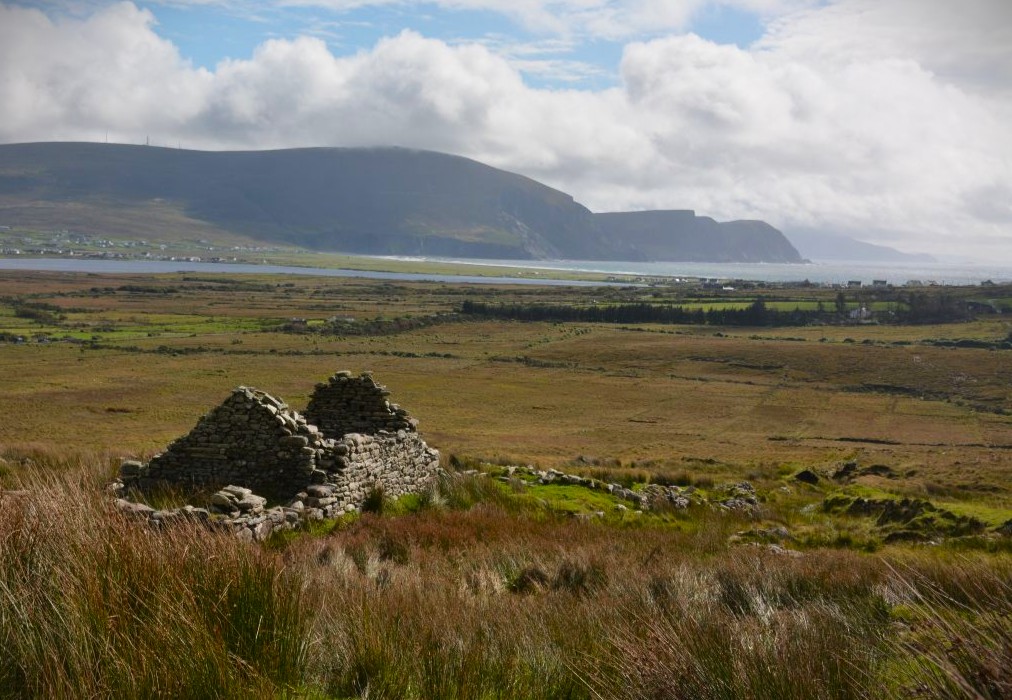
We pulled over. With the long-reach lens, I began recording a few views of the valley, the cemetery, and the distant landscape. It was one of those moments that photographers recognize immediately: something catches your eye, and you have to stop.
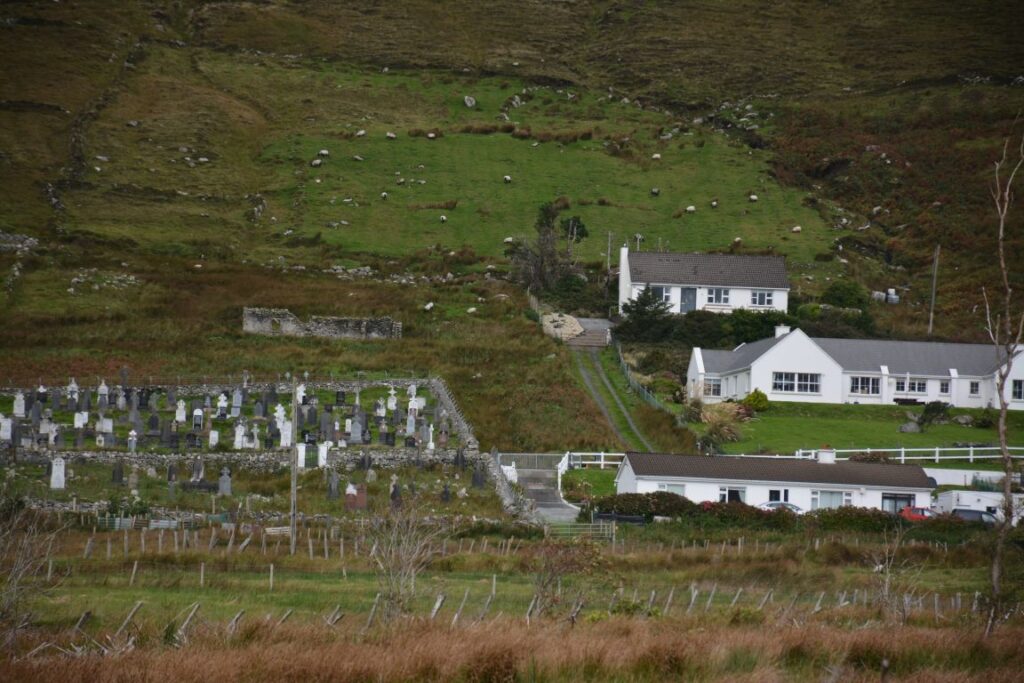
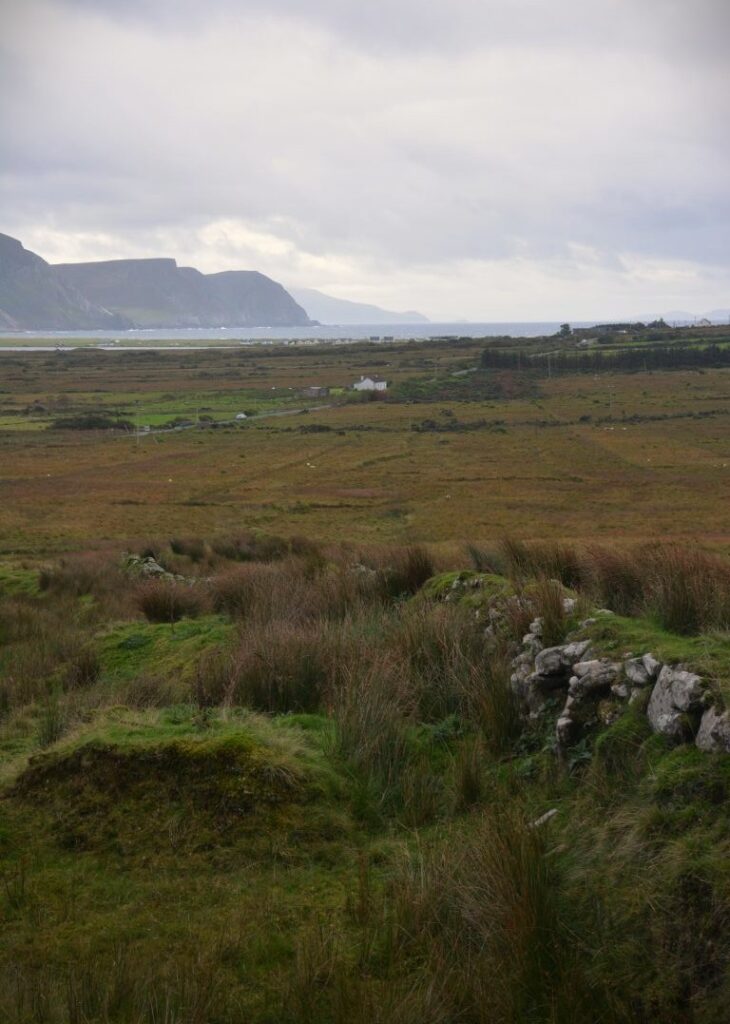
We continued on, certain that the GPS had sent us slightly off course. Less than a kilometer later, we checked the route again. According to the map, we were still close. We drove just a bit before turning right onto a long, narrow drive.
Only then did we realize the GPS had been right all along.
As I looked up toward the graves and the abandoned homes dating from the twelfth century, the significance of what we had seen just began to come into focus.
We had arrived at Slivemore
What first appeared to be a wrong turn had led us directly to one of the most unexpected—and memorable—photographic discoveries of our entire journey.
We parked and I decided to walk the journey up the hill. Tracy fighting a cold relaxed in the car.
The view of the valley to the left was only one Irish families could select.
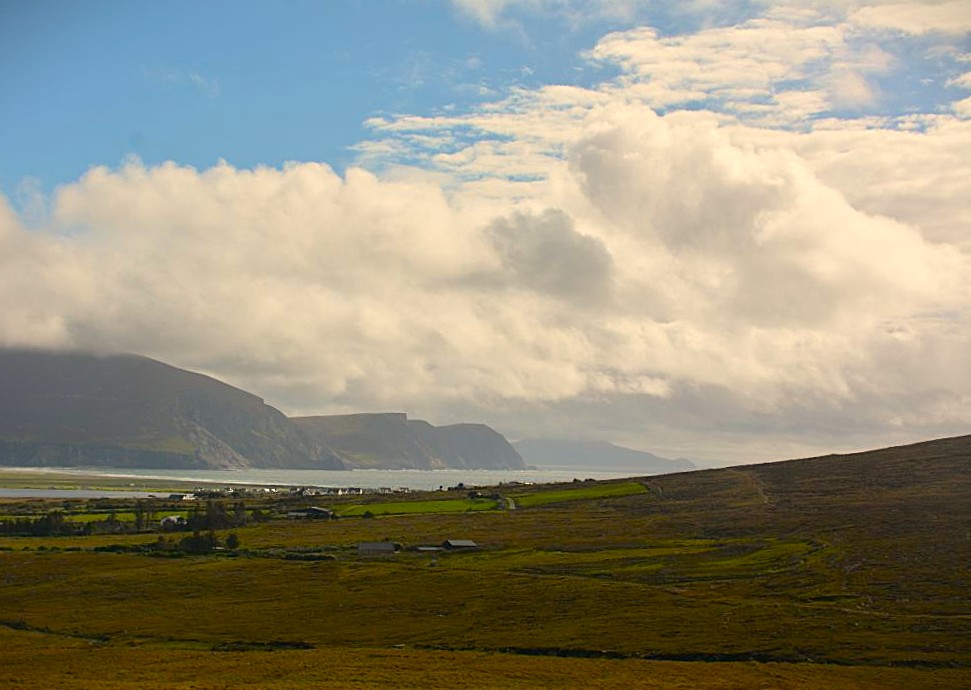
The walk was long and somber yet enlightening.
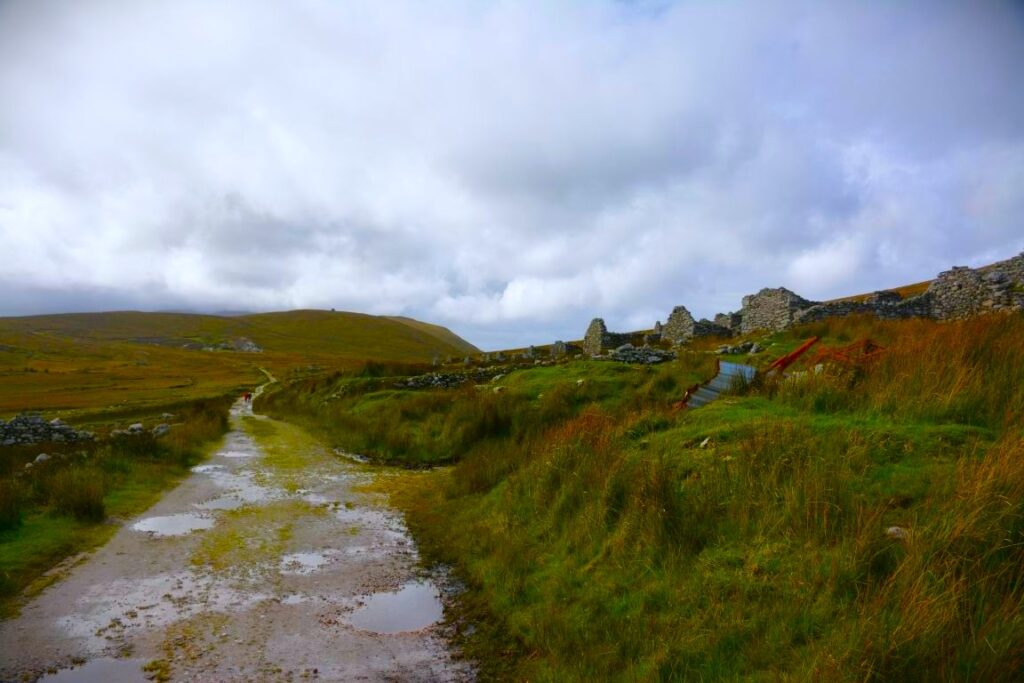
I reflected with every step what those families loved and endured.
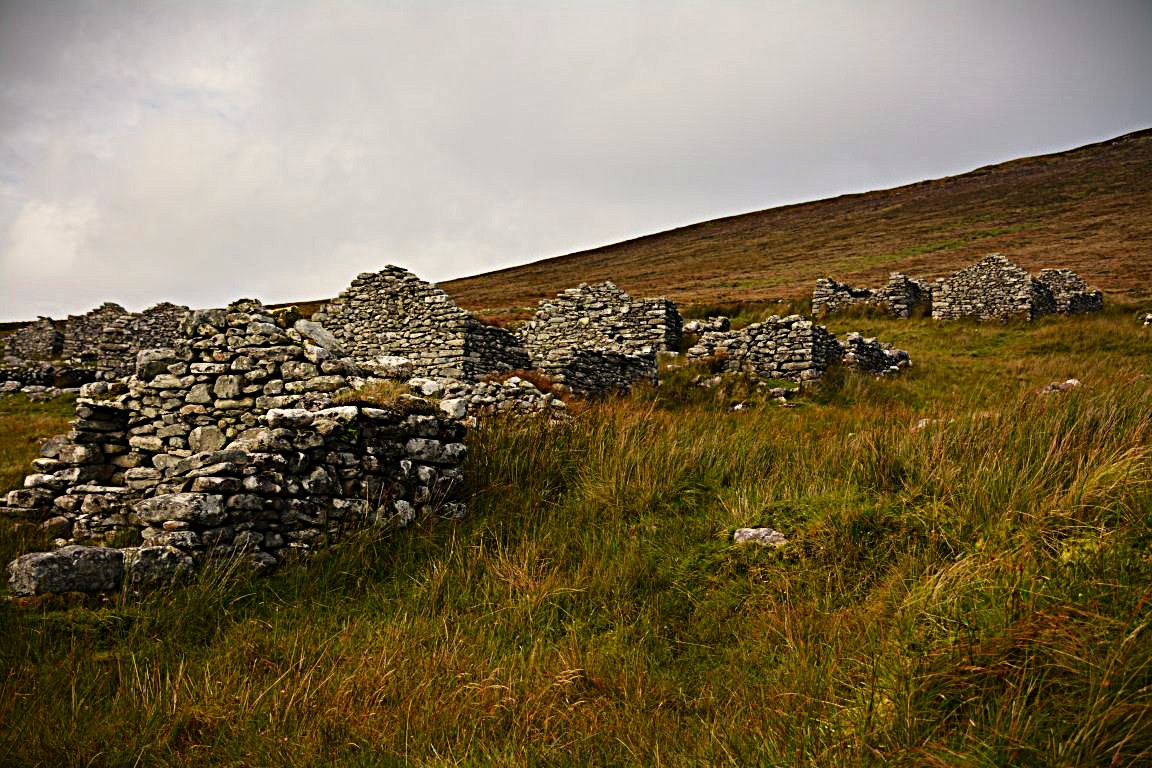
Beautiful perspectives, loving families with a future,
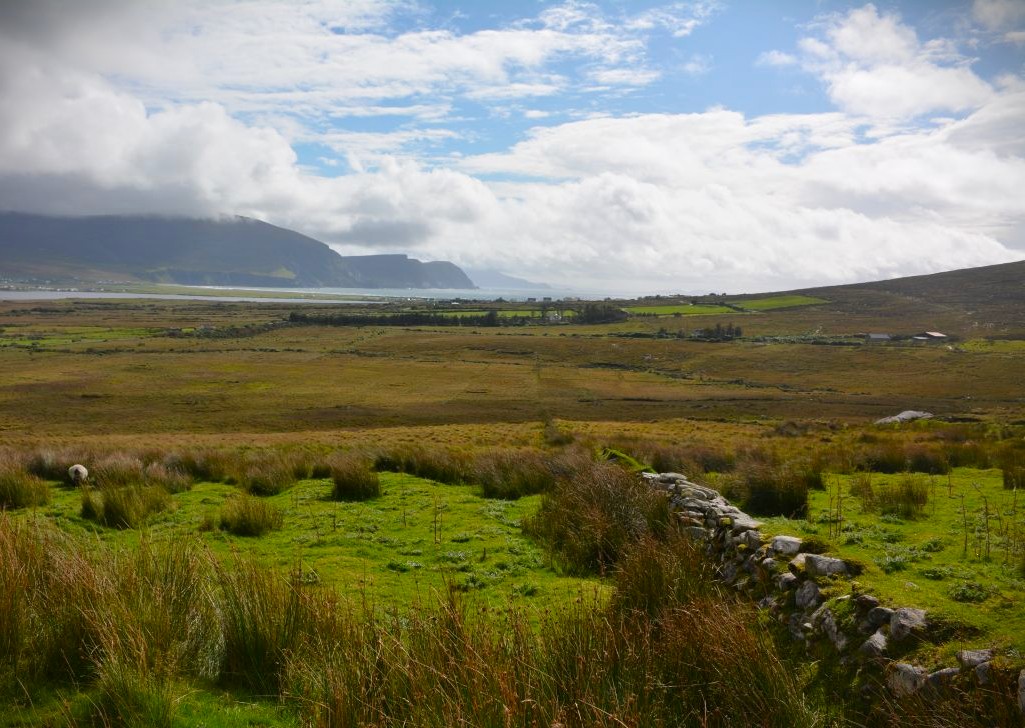
The Potato Famine; the internet is resplendent with the long history of Irish suffering.
What we saw were lost dreams
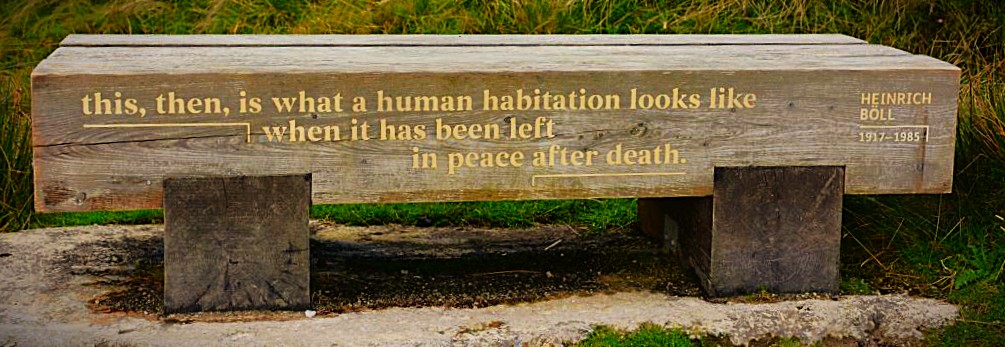
A Remarkable Encounter
On the long walk through the village, I met an elderly Irish woman—a truly beautiful soul.
We stopped for a moment, and she asked me a question I wasn’t prepared for:
“What is it that you want to capture in your photographs?”
It was a rather profound question.
I struggled to put into words, what I was trying to see through the camera. It wasn’t simply the houses, the landscape, or the remnants of an abandoned village.
I found myself thinking about the people who had lived here—their hopes, their dreams, their children, and the lives they had built in this beautiful place.
We talked about the history of the village and about her own connection to it. She told me that she tries to return every year, taking her time with each visit.
As I continued the climb toward the upper part of the village, the experience became almost surreal.
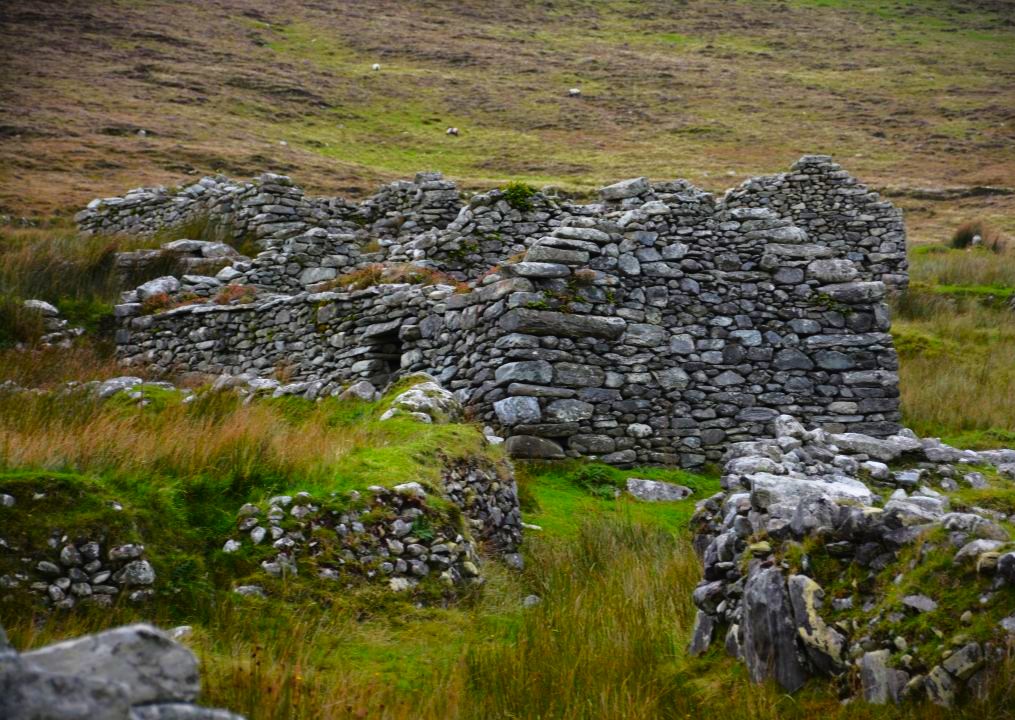
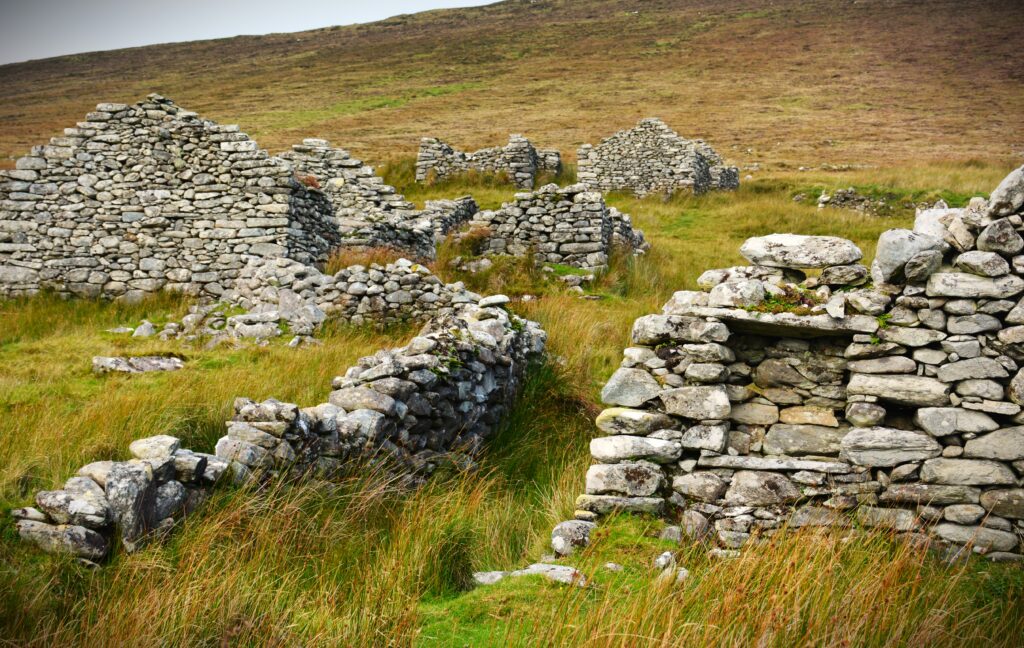
The houses were clustered together, overlooking a beautiful valley, much as they must have been generations ago.
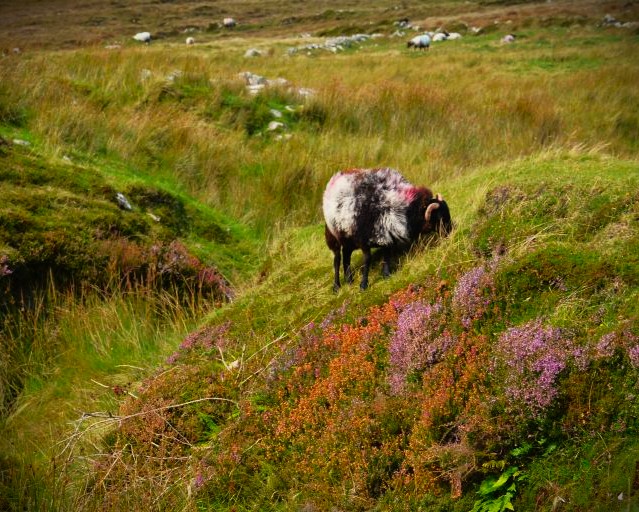
Sheep still wandered among the old homes, moving quietly through a landscape that seemed suspended between the past and the present.
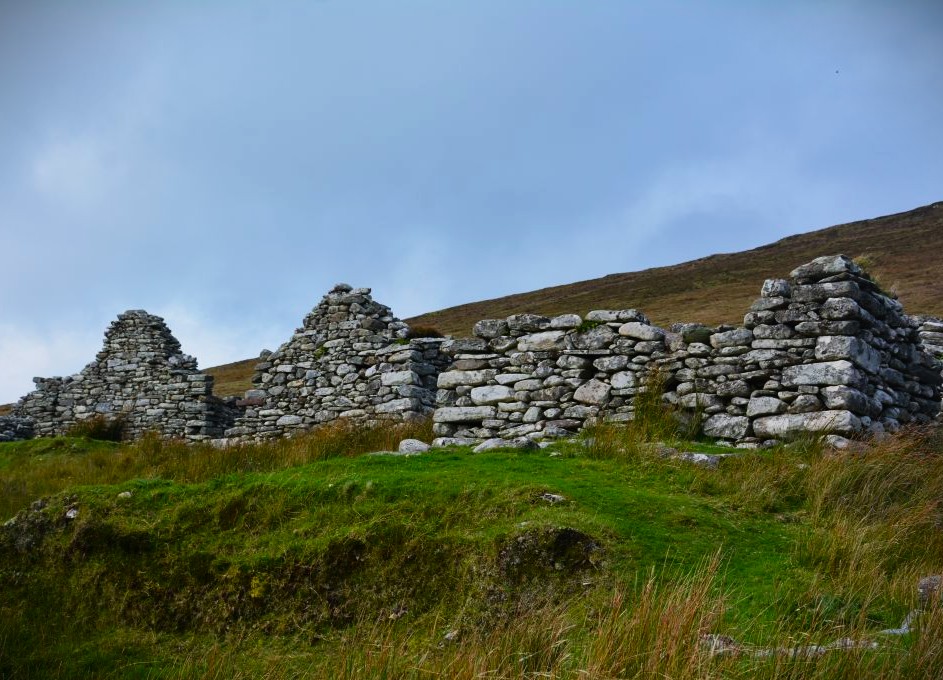
There were similarities in the construction of the houses and in the way they were gathered together in small clusters.
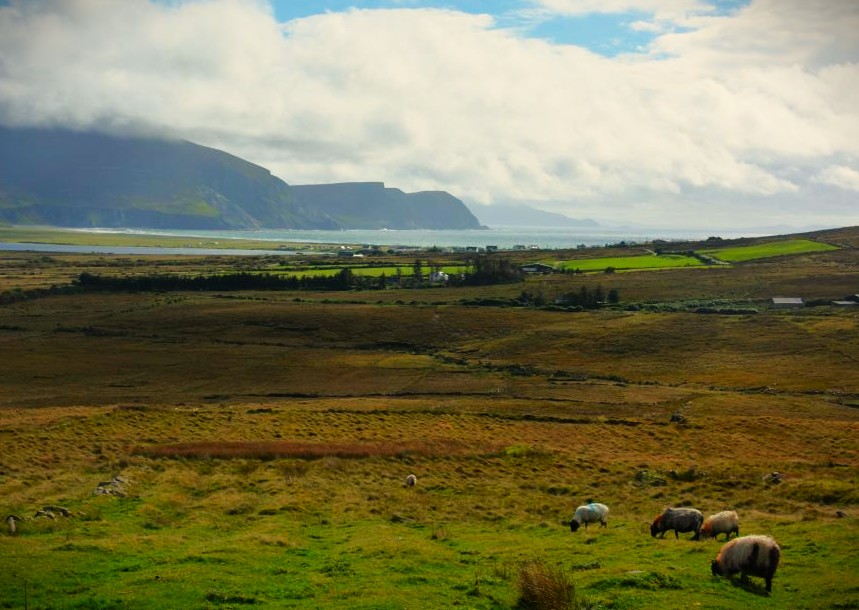
Looking across the valley, it was easy to imagine the life that once filled these homes—the rhythm of families, children, work, and community.
And yet, knowing how that life ended made the beauty of the place heartbreaking.
On the walk back to the car, I met the lady again. I will never forget the depth of her face, proud, yet honest.
We shared our thoughts about the village.
“Remarkable,” she said. “Beautiful, yet tragic.”
I asked if she lived nearby.
“No,” she replied. “I grew up in the dead center of Ireland.”
We talked a little longer, and then she told me something I will not soon forget.
She had recently returned to her old home and church after many years away. The house where she had grown up had been torn down to make room for a parking lot for the church.
When she entered the church many years later, some of her old friends would barely speak to her.
Then an elderly gentleman approached her. Almost as though making a confession, he told her:
“I was the final vote to tear down your home.
I regret it.”
She simply told him that she forgave him.
There was something profoundly moving about that moment—the weight of memory, regret, forgiveness, and the passage of time.
We talked a little longer and I told her that all of my family homes have been torn down in the name of progress. We simply nodded and went our separate ways.
As I reached the car to head to our next destination, Tracy said that a stranger gave her a small bundle of Irish heather.
“She was no stranger”, I replied and told her of our conversation in the solitude of that hill.
It was such a simple gesture, but it felt like a gift far greater than the flowers themselves.
It’s an encounter I shall never forget.
I came to this place to photograph an old village.
Instead, I left carrying a story.
Perhaps that is what I was really trying to capture all along.
Not simply the buildings or the landscape, but the people, the memories, and the lives that remain woven into this remarkable Irish countryside.
It’s Irish
Such wonderful people.
We still treasure it today.
.